
Summary: Before hiring a glass contractor, ask about license status, insurance, project history, material choices, written scope, crew makeup, timeline, and warranty terms. For window awnings installation or any other glass upgrade, get every detail in writing before work begins, so everyone shares the same plan, cost, and finish standard.
Get three quotes for the same window job, and you'll often get three completely different answers about what's included. The lowest number is not always the best value. In many cases, the difference comes down to missing materials, vague labor terms, or tasks that were never included in the original price.
Hiring a glass contractor in Arizona takes more than picking the fastest quote. Heat, direct sun, dust, wind, and heavy daily use put added strain on windows, storefronts, shower enclosures, awnings, and other glass systems.
Poor measurements, weak hardware, and rushed installation may not cause trouble right away. Once the next stretch of extreme heat or monsoon weather arrives, though, those weak spots can become much harder and more expensive to ignore.
Whether you need window repair, storefront glass, a shower enclosure, or window awning installation, asking a few direct questions can reveal how carefully a contractor has reviewed the job.
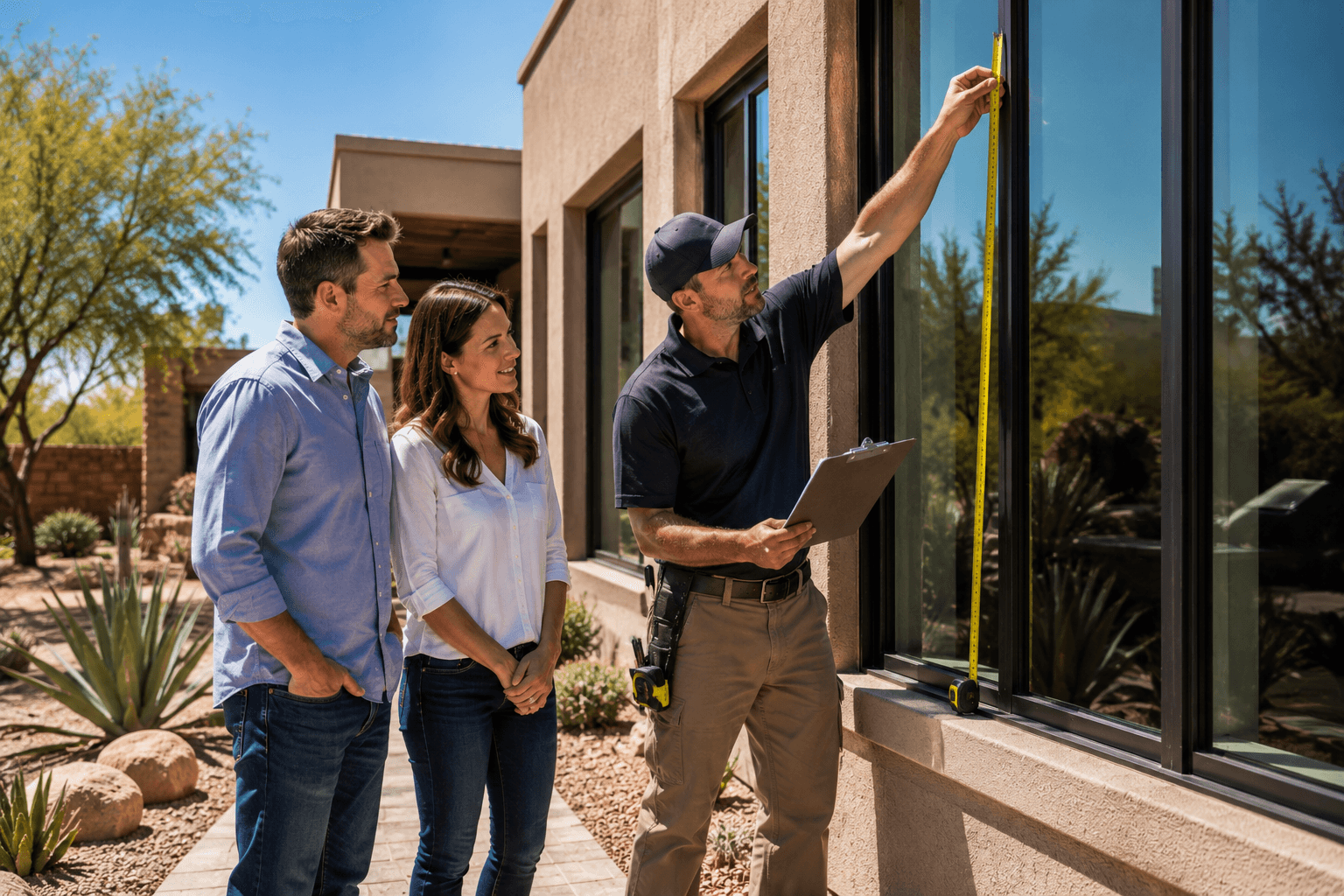
What Should You Verify About a Glass Contractor's Licensing, Bonding, and Insurance?
A legitimate glass contractor should hand over a current license number before a bid moves forward. In Arizona, the Arizona Registrar of Contractors runs a public license search that lets property owners check license status, bond details, and complaint history in a few minutes. The name on the quote should match the name tied to that license, not a related company or a subcontractor's name.
Insurance deserves the same scrutiny. Ask for a certificate of insurance listing general liability coverage. If crews or subcontractors will be on-site, ask about workers' compensation too. This one step reduces real risk if damage or injury happens mid-job.
A solid check should include:
- Confirming the license number through the Arizona Registrar of Contractors
- Matching the legal business name to the proposal
- Requesting current insurance documents, not outdated copies
- Checking whether the license class actually fits the project type
- Saving copies of every record alongside the signed quote
A contractor who avoids these questions or delays sharing documentation is raising red flags before the job has started.
What Similar Projects Have Completed in Arizona?
Glass systems face plenty of local stress in Arizona. High heat, monsoon storms, and mountain conditions can all affect long-term performance, making a contractor's local experience especially important.
Ask for project examples that match your scope. A shower enclosure doesn't prove storefront experience, and a window repair doesn't prove curtain wall expertise. For homes, ask about similar window styles and glass choices. For commercial projects, ask about access planning, tenant coordination, and trade scheduling.
Useful follow-up questions:
- "Can you show photos of similar finished work?"
- "Was that project residential, retail, office, or multifamily?"
- "What site issues came up, and how did you solve them?"
- "Did the project need permits or plan review?"
- "Who checked the final fit before closeout?"
A specific, detailed answer shows a contractor studied jobs like yours. A vague, one-size-fits-all reply usually means they didn't.
What Materials, Glass Types, and Systems Do They Recommend?
A good residential or commercial glass contractor should be able to explain why a specific glass type, frame material, or hardware set fits your project rather than giving a generic answer that supposedly works everywhere.
A west-facing window in Phoenix, for instance, may call for solar control glass. A storefront near a busy walkway may need safety glass and heavier-duty hardware. A shower door may need a specific hinge, sweep, and glass thickness to limit leaks and keep everything aligned over time.
For window awnings installation, ask how the shade system will attach to the wall or frame. Fasteners, backing, seal points, and drainage all affect long-term performance. A reliable contractor should also explain wind exposure and future maintenance requirements.
Arizona's sun and heat can wear out weak finishes, seals, and hardware quickly. Ask how the recommended materials will perform over time and what maintenance or replacement may be needed. If the contractor can't explain these details clearly, it's worth exploring other options.
What's Included in the Written Quote?
A clear, detailed quote protects both sides of the deal. It should list glass type, size, frame or hardware details, labor, disposal, site prep, and any permit allowance. A low price can turn costly fast if it quietly leaves out removal, sealant, trim, lift access, or after-hours work.
Arizona projects vary a lot by city rules, property type, and site limits. A single-family home may have simple access. A retail center may require work outside business hours. A managed property may need tenant notices, parking plans, or proof of insurance before crews ever arrive.
A useful quote should answer:
- What gets removed and hauled away?
- What exact glass, frame, or shade product will be used?
- Who pays permit fees if permits apply?
- What's excluded from the price?
- What could change the final cost?
- What deposit, progress payment, and final payment terms apply?
The quote should also spell out how change orders work. A hidden wall condition, a wrong rough opening, or a damaged frame can all shift the plan. Written change terms let owners compare real costs instead of a base price that quietly leaves out key items.
Who Will Perform the Work on Your Property?
The person who inspects the project or sells the job may not be part of the installation crew. Ask who will arrive on-site and whether the work will be completed by employees, subcontractors, or a combination of both.
For larger projects, confirm the on-site lead and your main point of contact. Property managers, architects, and general contractors may also need project documents, schedules, access plans, or proof of insurance before work begins.
Ask directly:
- "Who will be on-site each day?"
- "Who checks measurements before ordering glass?"
- "Who approves field changes?"
- "How will updates get shared with me?"
- "Will the same lead return for the final walk-through?"
For occupied buildings, crew conduct matters just as much. Workers may pass through lobbies, homes, offices, or tenant spaces throughout the day. Ask how the contractor sets work hours, parking areas, access points, and cleanup duties. These details can have a major effect on daily operations even when the physical installation takes only a few hours.
How Will They Protect the Site During the Project?
Glass work can affect surrounding surfaces if the site isn't protected properly. Ask how the contractor will manage dust, debris, work zones, and temporary openings, especially in Arizona's heat.
Also, confirm how they'll protect floors, walls, and other surfaces while keeping the work area safe for occupants.
Site protection usually includes:
- Drop cloths or floor cover along walking paths
- Temporary barriers around open areas
- Debris control during removal
- End-of-day cleanup
- Safe storage for glass and hardware
- Weather planning during monsoon season
A good site plan should also cover breakage procedures. Glass can crack during removal even with careful handling. Ask how the crew contains shards, protects nearby surfaces, and clears the area before people return, especially in schools, clinics, retail centers, and homes with kids.
What Timeline Should You Expect From Measure to Finish?
Glass projects involve measuring, ordering, fabrication, and installation, so ask for a realistic timeline. Confirm when measurements, approvals, and installation will take place, and how delays caused by suppliers or site conditions will be handled. A clear schedule helps you plan in a convenient way.
A simple, realistic timeline should include:
- Site review and measure
- Written quote and approval
- Product order or fabrication
- Install date
- Final walk-through
For commercial spaces, timing can affect revenue, lease terms, or tenant comfort directly. For homes, it can affect cooling loads, privacy, and daily routines. Ask whether the contractor can phase work by area, especially on larger properties, since phasing often reduces disruption without rushing the install itself.
What Warranty Covers Labor, Glass, and Hardware?
Warranty terms differ across glass, frames, seals, films, screens, awnings, and hardware, so it's worth asking for the warranty in writing before signing anything. The document should state what's covered, how long coverage lasts, and what actions could void it.
Labor coverage deserves the same review as product coverage. A manufacturer may cover a failed glass unit, but labor to remove and replace it can be a separate line item entirely. Hardware often has its own terms, and sealant or water control may depend on correct use, upkeep, and site conditions.
Good warranty questions to ask:
- "What part of the job does your labor warranty cover?"
- "What does the product manufacturer cover separately?"
- "Who files a claim if a product fails?"
- "What maintenance is the owner responsible for?"
- "Are water leaks, seal failure, and hardware issues treated the same way?"
A thorough warranty review also covers proof. Keep the quote, product data, final invoice, and care notes together in one file. Property managers may want digital copies tied to the unit, tenant space, or building asset record, since organized records make future claims much easier to review.
The Better Business Bureau is also a useful place to check a contractor's complaint history and how they've resolved past disputes before you sign.
Frequently Asked Questions
How do I know if a glass company in Phoenix is actually licensed?
Search the contractor's license number directly through the Arizona Registrar of Contractors' public database. It shows current license status, bond information, and any complaint history tied to that license, so you're not relying on the contractor's word alone.
Should I choose a specialized residential glass contractor or a general handyman for window work?
A residential glass contractor brings experience with the code requirements, safety glass rules, and sealing methods specific to window and glass systems. A general handyman may handle small fixes fine, but larger jobs like full window replacement or awning installs benefit from someone who works with glass daily.
What's a reasonable timeline for a custom glass order in Arizona?
It varies by product and supplier, but custom glass almost never arrives overnight. A trustworthy contractor will walk you through the full sequence: site measure, ordering, fabrication, and install, so you know roughly what to expect before committing to a date.
Do commercial glass projects need different questions than residential ones?
Some overlap, but commercial jobs usually add questions about tenant coordination, after-hours work, access planning, and code compliance for public-facing spaces. A commercial glass contractor should be comfortable answering those without hesitation.
What's the biggest red flag when vetting a glass installation contractor?
Vague answers. If a contractor can't explain material trade-offs, won't provide proof of insurance, or gives a quote with no itemized detail, those are strong signs to keep looking before you pay a deposit.
Making the Right Choice Starts with Asking the Right Questions
Hiring a glass contractor works best when the process starts with direct questions and written answers, not assumptions. Review the contractor's license, insurance, materials, project scope, crew plan, timeline, and warranty terms before work begins or a deposit changes hands.
Arizona's sun, heat, storms, and daily use place real demands on glass systems, making careful planning essential. Before choosing a contractor, compare written proposals, verify key records, and ask questions specific to your project.
Contact Demers Glass at 866-245-7760 to discuss your requirements or request a quote.