

What type of storefront glass system do you want for your business?
This is a decision you shouldn’t take lightly. Commercial glass storefronts are more than just windows. They define your store's curb appeal and functionality. Whether you're in Phoenix, Tucson, or any other city, you want to make the best choice for your business. And often, that decision comes down to framed vs. frameless glass storefronts.
So, how do you choose?
Should you go for the sleek, modern style of a frameless glass storefront? Or is the classic, durable look of a framed glass storefront the better option for your needs?
In this post, we’ll dig deeper into the framed vs frameless glass storefront debate, exploring the pros and cons of each to help you make the right decision for your business.
What Separates Framed and Frameless Storefront Systems
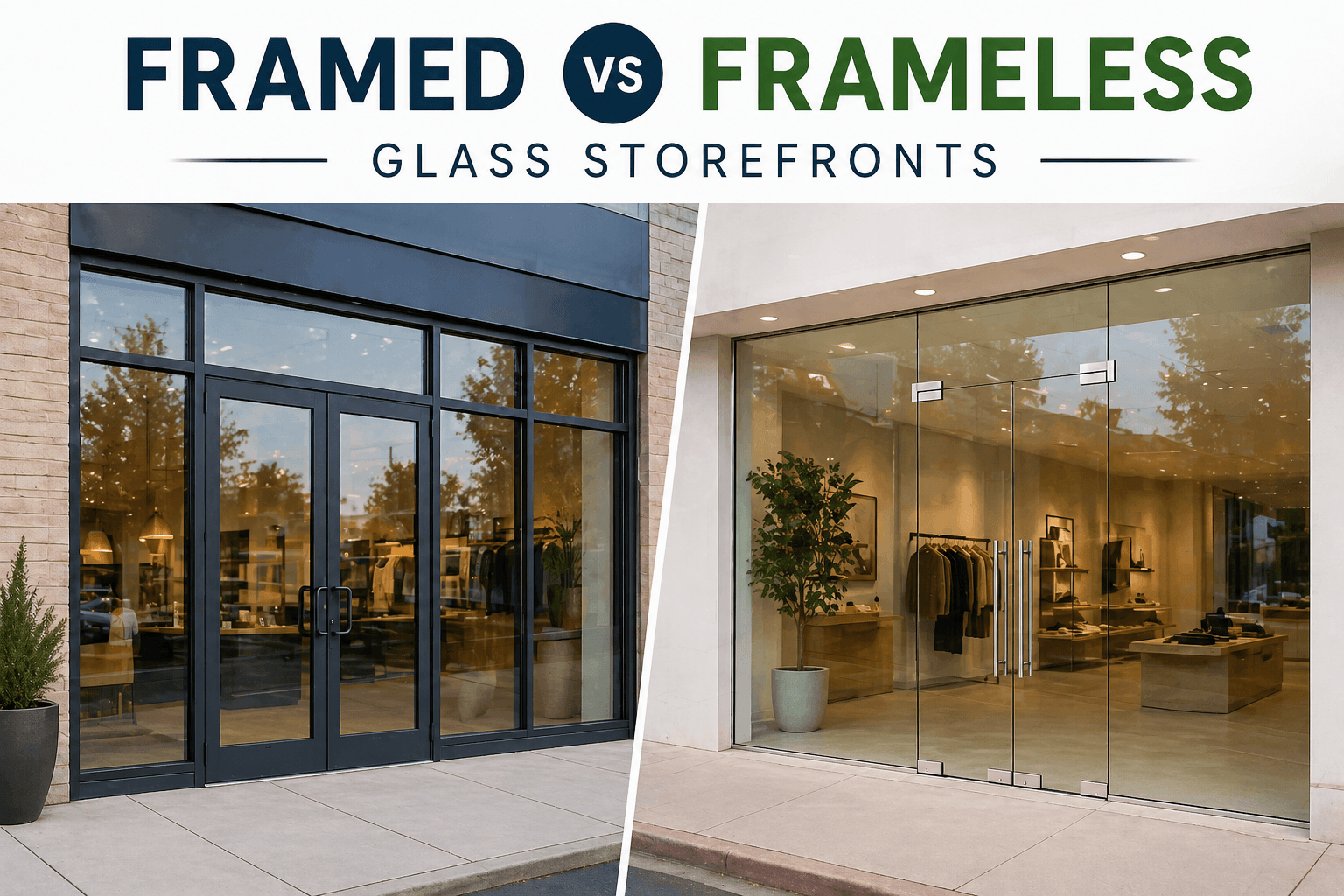
A framed glass storefront uses metal framing around the glass panels and doors, with aluminum being the most common material. The frame not only supports the glass but also helps create clear sightlines during installation and manages panel sizes and door hardware.
However, a frameless glass storefront uses minimal visible metal. It relies on thicker glass and carefully planned hardware. Designs often use patch fittings, top and bottom rails, or concealed closers to maintain a sleek, open look with fewer visual interruptions.
In Arizona, you can find different types of storefront glass systems, but these two stand at opposite ends of the design spectrum. Framed systems emphasize structure and economy, while frameless systems prioritize transparency and a modern aesthetic.
Now, let’s take a closer look at their pros and cons.
Pros of a Frameless Glass Storefront
A frameless glass storefront offers several appealing benefits that make it an attractive choice for businesses looking for a modern, sleek appearance.
Framed enclosures are more budget-friendly, while frameless options prioritize aesthetics and long-term value.
Clean Design and Better Visibility
The biggest advantage of a frameless glass storefront is its visual openness. With minimal metal in sight, your merchandise, interior finishes, and natural daylight shine through more clearly. This is why retail boutiques, salons, office lobbies, and hospitality businesses typically prefer this look. It feels current and uncluttered.
In many Arizona shopping zones, where the sun already draws attention to the facade, a frameless design can make a smaller storefront feel wider and more inviting. Whether people look at your shop from the sidewalk or the parking lot, a frameless glass storefront will instantly grab their attention.
Easier Day-to-Day Cleaning
With fewer frames, there are fewer edges where dust and grime can accumulate. This makes cleaning the glass more straightforward. In Arizona, where dust, wind, and monsoon residue are common, a frameless design can reduce your time spent on maintenance.
While it’s not maintenance-free, the plain layout often helps your janitorial teams move faster. Glass will still show fingerprints, water spots, and dust, but the reduced number of frame channels makes a noticeable difference.
Modern Fit for Higher-End Spaces
For projects where your brand’s image matters, commercial glass storefronts with a frameless design can deliver a more upscale, contemporary look. Architects typically choose frameless entries to create a seamless visual connection between the inside and outside, especially in renovated retail centers and modern offices.
Cons of a Frameless Glass Storefront
While there are several benefits, a frameless glass storefront also comes with its own set of challenges. Here’s what you need to consider.
Higher Cost in Many Cases
A frameless glass storefront typically comes at a higher price point compared to framed systems. The thicker tempered glass, specialty hardware, and tighter installation tolerances all add to the cost.
If your storefront opening is large or requires custom hardware or oversized panels, you can expect costs to rise even further. Given this, you should consider a more affordable framed option, which is more budget-friendly.
More Demanding Installation and Planning
Frameless commercial glass storefronts require more precise installation and planning. With less room for adjustment, openings must be measured accurately, and substrate conditions should be carefully checked.
If the floor isn’t level or the surrounding construction varies, achieving a proper fit becomes more challenging. This is why you need a thorough pre-installation review. Consider the design and site conditions before fabrication begins to prevent potential issues down the line.
Less Forgiving in High-Traffic Settings
In high-traffic locations, a frameless glass storefront can lead to more wear on exposed edges and hardware. This is not a flaw in the system. It’s simply a reality of daily use.
Restaurants, schools, medical offices, and multi-tenant retail entries may put constant strain on doors and closers. While a frameless system can still work well in these environments, the hardware and maintenance plan become more critical to provide long-term durability.
Arizona Factors You Should Consider When Making the Choice
When choosing between framed and frameless glass storefronts, you should also factor in local conditions. Arizona’s unique climate and environmental challenges can affect both the performance and upkeep of your storefront.
Heat, Sun, and Glare Matter
Arizona’s arid and semi-arid climate plays a significant role in storefront design. Large glass storefronts can increase solar heat gain if the glazing package isn’t selected properly. The frame alone won’t solve this issue. You need to consider glass type, coatings, tint, and orientation.
For example, a west-facing storefront in Phoenix or Peoria may require a different glazing and tinting strategy than a shaded store entrance in Flagstaff. This is where local expertise matters. Your commercial glass storefront will benefit if you choose to work with a local, experienced glazing professional.
Dust and Monsoon Season Affect Upkeep
Arizona’s dust storms, like the haboob last year, and monsoon rains can leave behind mineral spotting, dirt buildup, and debris. While frameless glass storefronts may be easier to wipe down, framed systems tend to hide some of the day-to-day wear better between cleanings. When considering a storefront, you should weigh not only cleaning ease but also how the facade will look after a week of local weather.
The best storefront choice depends not just on appearance, but on climate, traffic, and long-term maintenance demands.
Codes and Safety Still Lead the Process
When selecting a commercial glass storefront, you must also consider local building codes, door swing requirements, accessibility rules, and glazing needs (tempered or laminated). You might also need to think about whether your business needs an insulated glass, which offers energy benefits. Remember, a well-designed entry must meet your aesthetic, functional, and legal requirements.
Final Thoughts: Make the Right Choice for Your Business
Choosing the right type of storefront glass system is a critical decision that impacts both the appearance and functionality of your business. Whether you opt for the sleek, modern style of a frameless glass storefront or the durability and practicality of a framed one, you must understand your priorities first.
At Demers Glass, we specialize in providing custom solutions for all types of commercial glass storefronts. We help you with the decision-making process and make sure your storefront not only looks great but also lasts long.
Ready to get started? Contact us today for a personalized quote. Call 866-245-7760 and let’s bring your storefront vision to life!
FAQs
1) Is a frameless glass storefrontalways more expensive?
In many cases, yes. Frameless systems typically use thicker glass and more specialized hardware, which drives up the cost. However, the final price depends on factors like opening size, glass type, door count, and site conditions.
2) Which option is easier to clean?
A frameless glass storefront is generally easier to clean because it has fewer metal edges and joints. Framed systems have more corners and channels where dust and grime can accumulate.
3) Are framed systems outdated?
No, framed glass storefronts remain one of the most practical and commonly used choices for commercial projects. They’re still popular in modern Arizona buildings due to their balance of cost, durability, and flexibility.
4) What are the maintypes of storefront glass systemsused in Arizona?
Common options in Arizona include framed aluminum storefronts, frameless all-glass entrances, curtain wall systems, and specialty heavy-glass assemblies. The best option depends on your design goals, structural needs, and tenant use.
5) What matters most when comparing bold commercial glass storefronts?
When comparing commercial glass storefronts, consider factors like appearance, budget, traffic level, maintenance, glass performance, and code requirements. In Arizona, sun exposure and heat gain are also crucial factors to review.