
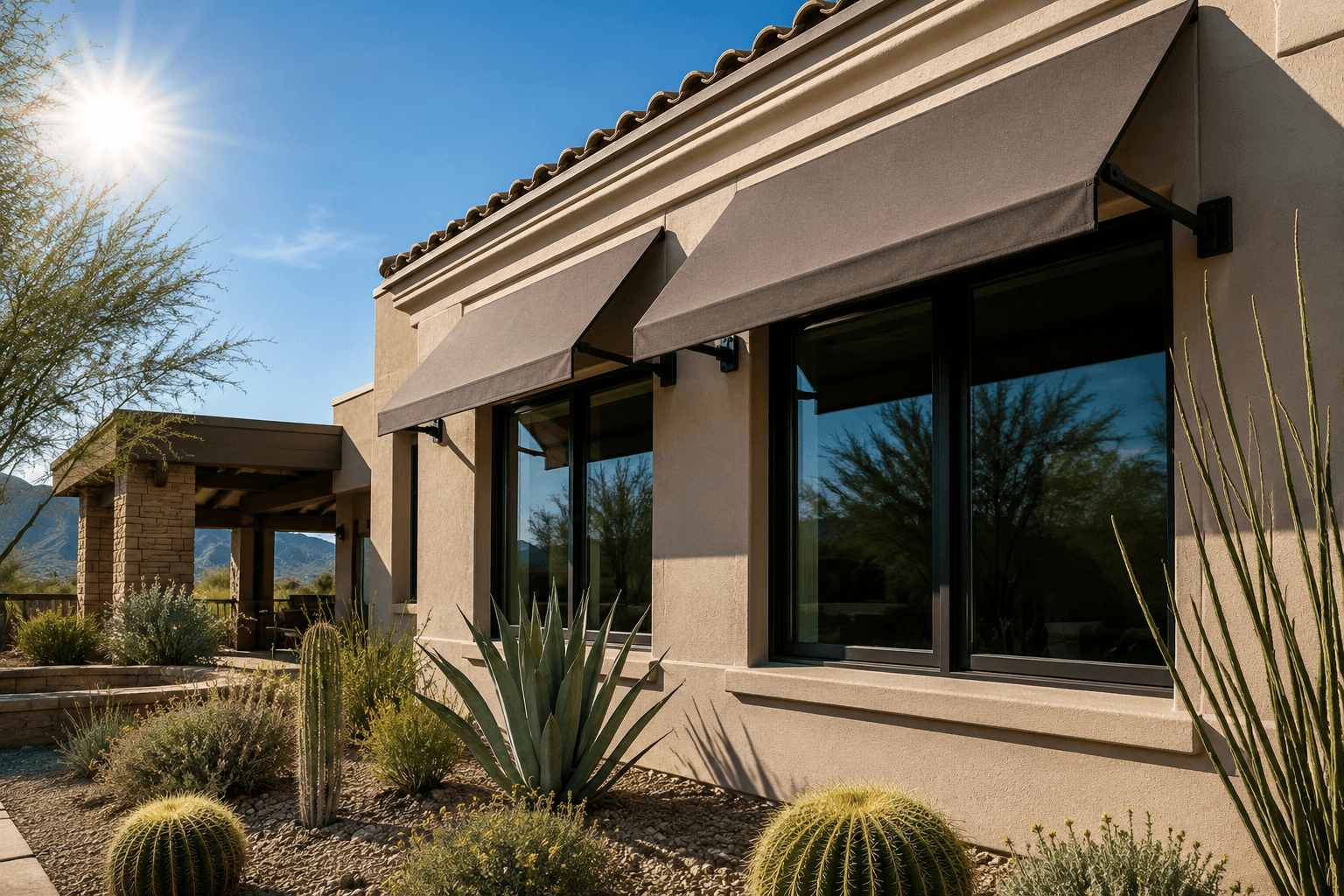
Summary: Window awnings block direct sunlight before it hits the glass. Less sunlight against the window means lower solar heat gain, cooler rooms, and fewer demands on the AC system. In Arizona, awnings usually perform best on south- and west-facing windows exposed to strong afternoon sun. A properly sized window awning can also reduce sun wear on trim, siding, flooring, furnishings, and other interior finishes.
The Arizona sun pushes straight through glass and turns rooms into ovens by early afternoon. Window awnings stop this heat before it ever reaches the window, which takes a lot of pressure off your cooling system.
South- and west-facing glass takes the worst of it. Interior blinds can only react after heat has already crossed the glass. Exterior window awnings interrupt the heat earlier and help rooms hold a steadier temperature during the hottest hours of the day.
For homeowners, property managers, and contractors across Phoenix and the White Mountains, awnings offer a practical upgrade without replacing windows or starting a major remodel. They add shade where it has the greatest effect while helping protect flooring, furniture, artwork, and fabrics from ongoing sun exposure.
Glass allows sunlight to enter a room and warm the surfaces inside it. Once the heat has crossed the window, the cooling system has to work harder to bring the temperature back down.
Awnings shade the glass from the outside and stop some of the heat before it enters the home.
Blinds and curtains still help with glare and privacy. But by the time light reaches an interior shade, part of the heat has already crossed the window. That's why exterior window awnings feel more effective in rooms that run hot.
A west-facing home office is a good example. An awning can cut late-day glare and keep the room easier to cool while leaving the view mostly open. The right projection shades the top of the window and still lets light in below.
According to the U.S. Department of Energy, awnings can reduce solar heat gain by up to 65% on south-facing windows and 77% on west-facing windows. Across a long Arizona summer, this reduction can take meaningful pressure off the cooling system and help lower energy use.
Which Windows in Your Home Need Awnings First?
Not every window needs the same fix. Sun exposure changes by direction, elevation, and nearby shade.
- West-facing windows take the harshest afternoon heat, especially in the low desert.
- South-facing windows get steady sun most of the day, though roof overhangs may already help.
- East-facing windows heat up mornings, but usually less than west-facing glass in summer.
- Higher elevation homes near Flagstaff or the White Mountains still benefit in summer, but need awnings built for wind, snow load and pine debris.
A quick walk around the property in the afternoon can reveal where heat is entering. Check for warm glass, faded flooring or blinds that stay shut all day. Those are the windows worth reviewing first, whether it's a bedroom, home office, lobby or retail display area.
How Do Awnings Compare to Other Shade Options?
Awnings are one tool among several. The right choice depends on your glass, budget, and how much control the space needs.
For most existing homes, an outdoor window awnings installation is the easier fix. Awnings can also work alongside other products rather than replacing them. Many homeowners combine awnings outside with solar and insect screens for added glare control on the busiest rooms.
What Design Details Affect Performance?
An awning’s size, angle, material, and mounting height affect how much useful shade it provides. A shallow awning may look neat but leave much of the glass exposed. An overly deep awning may block more sunlight than needed or interfere with a walkway, entrance, or nearby feature.
Projection is how far the awning extends from the wall. Width is how far it spans. Pitch is the downward angle. Together, these three details decide how much of the window stays shaded during peak sun.
- West-facing glass usually needs deeper projection, since the sun sits low later in the day.
- South-facing glass needs less depth, since summer sun stays higher overhead.
- Nearby walls, trees, and reflected heat from paving all affect the right fit.
Fabric awnings provide a softer look and suit most homes. Metal awnings hold up well on commercial buildings and high-use areas. Lighter colors reflect more sun; darker fabrics cut glare better. Whatever you choose, the frame needs to handle Arizona's heat, dust, and monsoon wind without wearing down early.
The Building America Solution Center, a DOE-backed resource, notes that awnings work best when sized wider than the window itself, since narrow awnings let angled sun slip in around the edges.
What Should You Check Before Installing an Awning?
Awnings attach to the outside of the building, so the condition and type of mounting surface deserve close attention. Stucco, concrete block, brick, and wood-framed walls require different anchors and installation methods.
Poorly placed fasteners can allow movement during strong winds. Openings around mounting points may also allow water into the wall if they are not sealed correctly.
Before work starts, it helps to check:
- Window direction and peak sun hours
- Wall type and anchor points
- Clearance above doors, walkways and parking areas
- Drainage, roof runoff and irrigation overspray
- Nearby lights, cameras or signage
- Wind exposure, especially on corners or upper floors
Homeowners associations may restrict awning colors, materials, patterns, or placement. Confirming those guidelines before choosing a product can prevent delays or requested changes later.
A solid window awning installation plan should account for the property itself rather than relying on a standard size. Window height, sun angle, wall construction, and surrounding features can change what works from one building to the next.
How Much Care Do Awnings Need Over Time?
Awnings are relatively easy to maintain, but dust and outdoor debris will collect on the fabric and frame. Light cleaning a few times per year helps prevent dirt, pollen, bird droppings, and plant material from becoming harder to remove.
Use a soft brush, mild soap, and water when cleaning fabric awnings. Harsh cleaners may damage coatings or cause premature fading. Metal frames can usually be rinsed and wiped down, though moving joints may need occasional attention.
After monsoon season, check for loose fasteners, bent supports, damaged fabric, or debris trapped near the mounting points. A short inspection can catch wear before the next round of high winds.
Retractable awnings should also be opened and closed before the start of summer. Listen for unusual sounds and watch for uneven movement, hesitation, or fabric that does not roll correctly. Catching a minor issue early is usually easier than dealing with a jammed awning during peak heat.
Awnings also work best when the rest of the window is in reasonable condition. Old single-pane glass, failed seals, air leaks, or damaged frames may still allow unwanted heat into the room.
Keep in mind, awnings work best as part of a bigger comfort plan. If a room still runs hot with old, single-pane glass or poor seals, pairing an awning with updated window replacements often solves the problem for good.
Frequently Asked Questions
Do window awnings actually lower energy bills?
Yes. Window awnings reduce the amount of direct sunlight that reaches the glass, which limits indoor heat buildup. Your AC may run less frequently or for shorter periods, particularly in rooms with south- or west-facing windows exposed during the hottest part of the day.
Are window awnings worth it in Arizona specifically?
Arizona’s long summers and intense sunlight make exterior shade especially useful. Window awnings Phoenix, AZ homeowners install tend to produce the most noticeable comfort improvements on west-facing bedrooms, offices, living areas, and other rooms exposed to direct afternoon sun.
Can I install awnings on just one or two windows?
Yes. Many homeowners start with the hottest rooms first, like a west-facing bedroom or home office, then expand later if needed.
Do awnings block too much natural light?
Not if sized correctly. A well-designed awning shades the upper part of the window while leaving the lower portion open for light and view.
Are fabric awnings durable in desert heat and monsoon wind?
Modern acrylic and synthetic fabrics hold up well against sun and wind, though frame quality and proper anchoring matter just as much as the fabric choice.
Do awnings work on commercial buildings too?
Yes. Metal-framed awnings are common on storefronts and commercial sites, especially where durability and a clean look both matter.
Create the Perfect Look with Custom Window Shades
A good shade plan starts with the windows that feel hottest first, then works outward. Direction, wall type, projection, and material all shape how well an awning performs.
Addressing the hottest windows first can improve comfort without forcing you into a full window replacement or whole-property project. The right awning can lower direct sun exposure while still preserving the daylight and views you enjoy.
If you're planning a residential window awning project anywhere in the Phoenix Metro area or the White Mountains, Demers Glass has installed glass and shading solutions across Arizona since 1977.
Reach out for a quote and get a plan based on your home's actual sun exposure.