

Your storefront is the first thing customers see when they approach your business, and having a clean, functional, and visually appealing glass system is a must. More than just an entrance, the storefront glass affects your store's safety, curb appeal, indoor comfort, and daily footfall.
But just like anything else, your storefront glass can face issues over time, whether due to Arizona's hot and arid weather, wear and tear, or accidents. If you're noticing cracks, leaks, or difficulty with your storefront glass door, you need to address these problems promptly.
In this post, we’ll take a closer look at the most common storefront glass issues that business owners in Arizona often encounter and provide helpful tips on how to fix them.
1. Cracks and Chips in Glass Panels
Cracks and chips are among the most common storefront glass issues. In Arizona, heat stress, flying gravel, hard door impacts, and vandalism can all cause damage. Even bullet-resistant and riot control glass can break down eventually. No glass structure is permanently impervious to vandalism.
You can use a temporary tape, but it's not a true fix. It's better to call a storefront glass company to have a look at the damage. Even a small chip near the edge can weaken the entire pane, increasing the risk of sudden breakage.
The solution depends on the size, depth, and location of damage. Taking fast action reduces safety risks. It can also lower or even save the cost to replace storefront glass by preventing further damage to nearby framing or hardware.
Even small chips can compromise structural integrity, making early repair critical.
2. Foggy or Cloudy Insulated Glass
Cloudy storefront glass typically indicates a failed seal in an insulated unit. When the seal breaks, moisture enters the space between panes, causing haze, streaks, or a milky appearance that regular cleaning won’t remove. In Arizona, prolonged sun exposure can accelerate seal failure.
The primary storefront glass repair is replacing the insulated glass unit, not just cleaning. You should also check the frame condition, glazing beads, and drainage paths to make sure the new unit performs as intended. If you're worried about storefront glass cost, know that replacing a single failed unit early is often more cost-effective than waiting for multiple units to fail.
3. Doors That Stick, Drag, or Will Not Close Right
If your storefront entrance sticks or drags, it's more than just an inconvenience. It can strain hinges, pivots, closers, and the glass itself. This typically happens because of heavy use, settling, worn hardware, and misaligned rails, which are more likely to affect high-traffic retail locations.
The fix starts with a thorough hardware inspection, which is better performed by a commercial storefront glass repair expert. A trained technician might adjust pivots, replace worn closers, reset alignment, or fix threshold issues.
If the door glass has stress marks or edge damage, you may need additional repairs. Waiting too long can turn a simple adjustment into a larger and more expensive storefront glass repair.
4. Loose Gaskets, Weatherstripping, or Glazing Vinyl
Rubber parts around storefront systems hold the glass in place, reduce rattle, block dust, and prevent air and water leaks. Even a minor leak can lead to water damage, which can set you back anywhere between between $1,834 and $7,598. Typically, repairing water damage is more expensive than the cost to replace storefront glass.
Over time, Arizona’s heat can dry out the rubber parts. Once they shrink, crack, or pull away, the system can feel loose or noisy. The easiest and most cost-effective way to address this issue is to replace the damaged material with the correct profile.
The key is using the right size and type for your system. Mismatched gaskets can cause leaks or put pressure on the glass. That’s why you need to find a local, experienced commercial storefront glass repair team. Someone reliable who focuses on matching parts rather than rushing the job.
5. Water Leaks Around the Storefront
Water may start to pool around storefront glass after monsoon storms. Leaks might come from failed sealant, clogged weep holes, poor flashing, frame movement, or cracks in surrounding finishes. The water can appear far from the actual entry point, making the source easy to misread.
The best fix starts with a methodical leak check, not guesswork. Again, you should call a storefront glass company for a thorough inspection. They will typically inspect sealant joints, drainage paths, frame corners, and nearby wall transitions.
Resealing might solve the problem, but some cases require frame repair or glass resetting. Remember, a careful diagnosis protects both the storefront and the surrounding wall system.
Water issues often start small but can lead to costly structural damage if overlooked.
6. Scratches and Surface Damage
Scratches can result from improper cleaning, metal tools, windblown debris, graffiti removal, or nearby construction dust. In bright Arizona sun, even light scratches can become highly visible, affecting your storefront’s appearance.
Shallow surface marks may improve with professional polishing, but many scratches cannot be removed without causing optical distortion. Deep scratches typically require glass replacement.
Prevention is the only long-term fix in this case. Use soft, non-abrasive cleaning tools, avoid razor scraping, and protect your glass during tenant work or upgrades. A qualified storefront glass company can help you assess whether repair is possible or if replacement is necessary.
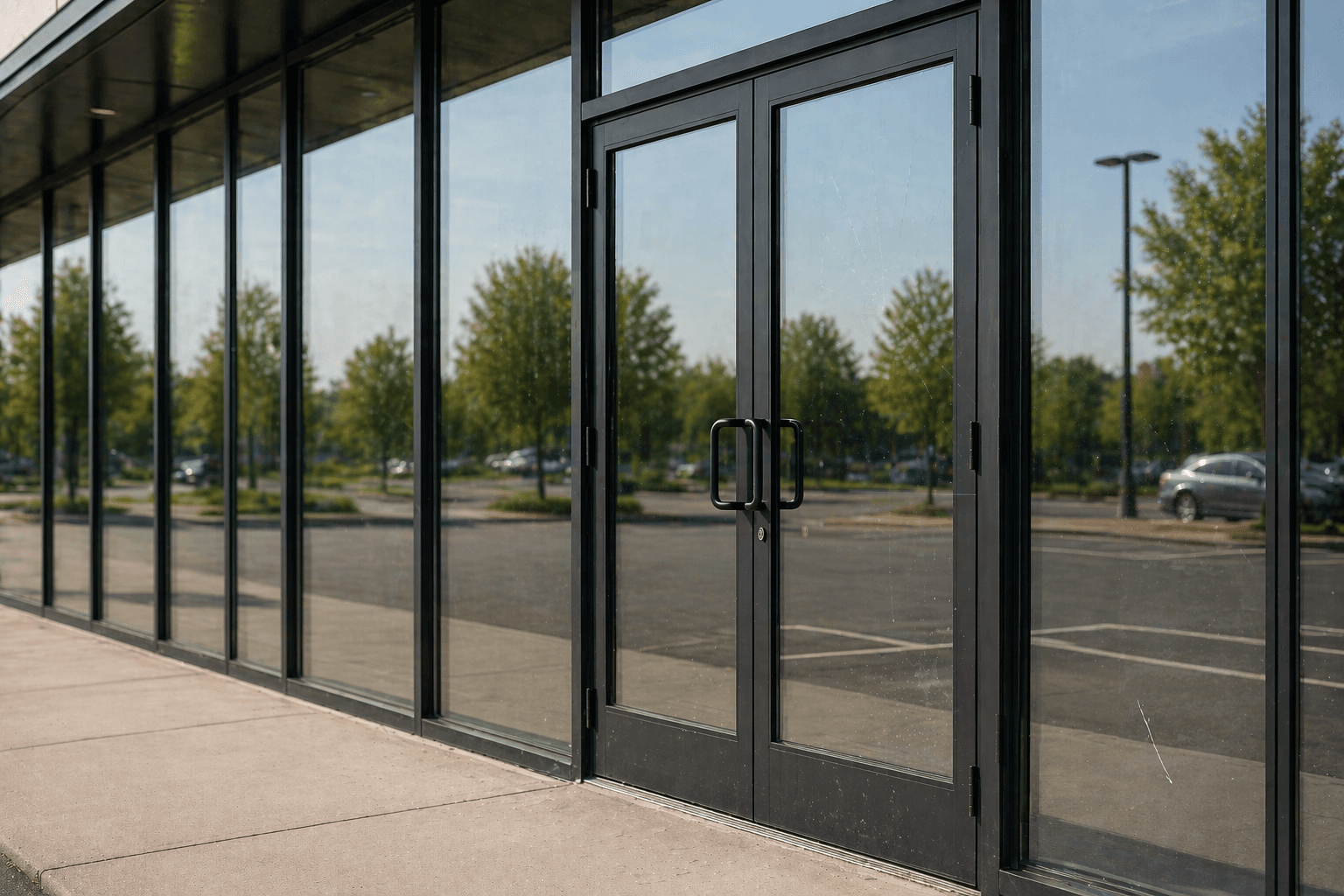
7. Broken or Worn-Out Door Hardware
Storefront systems rely on closers, locks, panic devices, pivots, handles, and thresholds. When one part wears out, the entire system can go out of balance. A failing closer can cause slamming, a worn pivot can make the door sag, and a bad lock can compromise security and life safety.
Replace the worn hardware with compatible commercial-grade parts and check the full door at the same time. Hardware problems are often linked to frequent storefront glass door repairs, especially in older shops or historic buildings in Arizona.
8. Air Leaks and Poor Energy Performance
If your storefront feels hot near the glass, air leakage or poor glazing performance could be the cause. Arizona businesses have to deal with long cooling seasons, so even small leaks can affect indoor comfort and raise your utility costs.
These storefront glass door repairs could include replacing weatherstripping, repairing sealants, adjusting doors, or upgrading glass to more energy-efficient units. Instead of thinking about how much storefront glass costs upfront, consider the long-term savings in energy bills and comfort.
9. Outdated Safety or Code Compliance Issues
Older storefronts, such as those in the heritage areas in Phoenix or other major cities, may no longer meet current safety or code standards. The glass may not have the proper safety rating, and the entry hardware may not function properly for egress.
Sometimes, bottom rails, door closers, or lock setups may also fail to meet present-day safety needs. If that's the issue, get your storefront reviewed by a qualified glazing professional. This is especially useful during remodels or ownership changes.
Final Thoughts: Stay Ahead of Your Storefront Glass Maintenance
Most storefront glass problems start small. A loose gasket, a dragging door, or a minor chip may not seem urgent at first. However, these issues tend to spread under the stress of heat, traffic, and weather. Arizona conditions are tough on these systems, so timely storefront glass repairs and maintenance are non-negotiable.
Demers Glass has been part of Arizona’s glazing trade since 1977, providing the expertise and service you need to prevent minor wear from becoming major damage. Whether you need storefront glass door repair or any other glass service, from shower enclosures to windows, we're here to help.
Get your quote now or call 866-245-7760 to connect with one of our glazing experts.
FAQs
1) How fast should cracked storefront glass be repaired?
Cracked storefront glass should be inspected as soon as possible. Small cracks can spread quickly, especially in heat or high-traffic areas. Taking immediate action is the safest approach to avoid further damage.
2) Can foggy glass be cleaned, not replaced?
If the fog is between the panes, cleaning won’t solve the issue. This typically indicates a failed insulated unit seal, and replacement is usually the best fix.
3) What affects the cost to replace storefront glass?
The cost to replace storefront glass is influenced by several factors, including size, glass type, tint, safety rating, thickness, frame condition, labor access, and urgency. Custom doors and insulated units usually cost more than standard single panes.
4) Is storefront glass repair always cheaper than replacement?
Not always. Minor hardware or seal issues may cost less to repair. However, deep scratches, failed insulated units, and cracked safety glass typically require replacement.
5) When should a property owner call a storefront glass company?
You should call a storefront glass company when glass is cracked, doors are misaligned, leaks appear, hardware fails, or the storefront no longer feels secure or weather-tight. Early inspection can help you prevent larger, more costly repairs down the line.